Posts

Journalism - why can't it be more objective?

Image
The simple answer is that journalism is in the same test-tube as the rest of the experiment. Emile Zola defined art as a corner of reality viewed through a temperament. That describes journalism pretty well too. After all, when you look at something, you have to look at it from somewhere. There really is no ultimately objective position from which we can view our current planetary reality; and if we’re honest, fences are too thin to sit on. So expecting any entity that is bound by space, time, matter and energy to be objective is a forlorn hope. But not all is lost in this existential subjectivity. William Cobbett Thomas Paine There are things to which journalism can aspire. Good examples of this emerged from late eighteenth century inequity. William Cobbett and Thomas Paine blogged in print about the sins of the system and those who manipulated it. Inspired by their sense of injustice, both pamphleteers lowered the water level on social issues - and suffered the consequen...

The journey from digitalisation to disruption - what happens after things get computerised?

Image
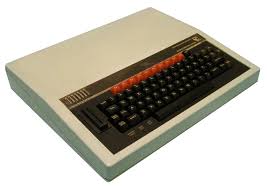
Anyone with a few skills can now make a website that looks like a global corporate. I’ve seen several activities and professions confront digitalisation. When I started at the BBC, computers were expensive and required a lot of knowledge to operate. In the 1980s we used BBC micros to automate several time consuming operations to make animated computer graphics, until the IBM PC took over. This was a process of computerisation and was not very disruptive - it was not really accessible to many. Adequate knowledge and skills were quite hard to acquire. We needed the expertise of broadcast engineers And we didn’t dream in digital yet. Moore’s Law has allowed ever smaller processors to take over analogue processes. As time has gone by, the spread of computers into just about everything has forced many activities to a digital domain; now they have become digitalised. In broadcast, giant videotape machines began to get smaller, smarter and contained computers. By 1980 there were mach...

Rent-A-Producer

Image
Video is irrefutably one of the most compelling communication media. It works particularly well in channels, but it quickly becomes expensive in bulk. Therefore hire a part time producer to minimise costs and retain the essential skills. Here is the problem confronting a lots of organisations. Everybody knows that video is possibly the most powerful of all communication media. Testimony to this lies in the deluge of video swamping almost every aspect of life. Nobody spends much time randomly seeking out things to watch; we tend to rely on two main approaches. Consensus. If lots of people share a video then it will be more easily found. The other way is to follow channels. Channels publish content that have some consistency. The audience gets to know the sort of stuff that a broadcaster puts out and this narrows the filter. Finding something agreeable to watch on Netflix can take a lot longer, unless the recommendation system works for you. A channel requires regular and frequen...

Story. Lens and looking glass.

I barely watch broadcast television any more - and all too often even the news is a victory of prominence over significance. I don't know about you but making an appointment with a TV in order to be informed, educated and entertained seems like a ludicrous thing to do in this age. Netflix and other online, on-demand providers enjoy an unlimited shelf space that makes enduring works available at a time convenient to me. Why do I want to enjoy these works? For the story of course. The dual purpose of entertainment has always been to both escape and explore reality. There is a second problem, and it also applies to the film industry. Over sensitive to ratings, insipid commissioning is prone to choosing remakes over reinvention. There is a chasm of difference between the process by which great works are made and simply re-making great works. The latter is often doomed to obscurity because we just misunderstand story. We think of it as a manifestation of some creative aethereal flux,...

News, fast and furious...

Image
Smartphones are increasingly being used to capture audio and video. Whilst it's true they are getting very much better, they have limitations which prevent them from achieving the best of their capabilities: they are so light it's hard to hold them still they have very small lenses which limit the amount of light reaching the sensor their built-in microphones often face a different direction from the camera and cannot get close enough for good interview sound. Much of the footage that they generate is used simply because it can be made and it's broadcast only when there is no alternative. We have become used to the footage from Egypt, Libya, Syria and the London riots. But smartphones are also computers, and very powerful ones. They can run programmes which are able to interact with sound, stills and video. Editing apps are becoming very common and they can take the footage and turn it into the same sort of packages produced by the long established equipment and pr...

Reality of iPhone Reporting

There are three main areas of concern over using iPhone as a tool for mobile journalism: • Video quality. Here is a side by side test of the 4S and the Canon 5D Mk II - http://vimeo.com/30606785  shows them hard to tell apart. But there are reasonable criticisms; shaky images and a tiny lens. To address these issues there is a device which holds an large accessory lens, weighs more and has many extra points of attachment for accessories and mono/tripods. The Owle Bubo now sells under another name but is still available. • Sound. There is an extremely expensive app, Lucie Live is Skype on steroids, which is currently used by broadcasters like the BBC. It can use the iPhone internal mic, which produces broadcastable sound. But, with an impedance matching cable from VeriCorder you can use unpowered or self powered XLR broadcast quality mics. The iPhone handles sound at above broadcast specs. If you need Phantom power then there are pre-amps you can get. I regularly use reporter, r...

The New News

News has many paths to get from event to edit. From a phone to a satellite link covers a lot of different technology and technique. It also depends on what is being covered, how it is being covered, and for how long. The traditional broadcast ENG workflow is expensive. A lot of online and print newsrooms try to emulate the broadcasters, but with cheaper equipment to control costs. Sony A1 and PD150 instead of 570 DV Cam and XDCAM HD cameras etc. The model involves some research, a shoot then back to base for an edit - or on laptop if freelance. And it's fine, but slow. The reason for working like that is the traditional limitations of tape based workflow and the fact that the edit equipment is separate from the camera. But technology has mitigated these limitations. If you have a camera, audio, computer and data connectivity on the same device then you can shoot, edit and deliver complete packages very quickly. Here is our coverage of WAN-IFRA's Digital Media Europe 2012 ...

Framing Questions for Interviews

Image
The fourteenth century is not one which the English celebrate with any great pride - if, indeed, at all. The population had been halved by the Black Death, two kings wrested from their throne, and English dreams of empire had crumbled in the attrition of the hundred years war. Not quite the end of the world, but you could definitely see it from there. In the candlelit Kentish dark, and with his quill on vellum, the then Clerk of Romney wrote up his Register. Daniel Rough added a short epigram which may well have been his critique on the times in which he lived: Si sapiens fore vis sex servus qui tibi mando Quid dicas et ubi, de quo, cur, quomodo, quando. If you wish to be wise I commend to you six servants Ask what, where, about what, why, how, when. Some six hundred years later, the relationship with France was healing, the British Empire far exceeded expectations, and a journalist called Rudyard Kipling had a story published in a womens' magazine. The Elephant's Chi...

It's not Groundhog Day, it's oscillating between the horns of a dilemma

There is a central dichotomy for news media organisations. Doing the news properly is very expensive. To do the news properly means being completely independent. Funding the news generally depends upon advertising revenue. Advertising requires a relationship with the advertiser. This is a conflict because how can you have an independent activity when it is dependent, for its function, on precisely those from whom it should be independent in the first place? If you see what I mean. Al Jazeera is probably the most respected news service in the world - it will remain so long as it gets its funding from a hands-off benefactor. Second in reputation to AJ is the BBC's news service. It is funded by public license fee and is quickly in trouble with which ever government is in power at any given time. It's mandated to speak truth to power. It seems these things go in cycles. In 1896, Adolph Ochs bought and saved the New York Times by focusing on excellent and principled journalism. ...

Trimming the taproot, St Malo Corsairs and the Falklands Islands

Image
For years I have spurned holidays as inefficient, stressful and self-indulgent uses of time. I must now suppose that there really is some good in them after all. A few days boating around the armpit of the Cherbourg peninsula had a surprisingly regenerative effect. Usually, I speed through to a more southerly destination, but St Malo is a treasure worth exploring. It is also the eponymous origin of the 'other' name for the Falkland Islands. The Malouines have been largely ignored by an English history still smarting from the tribute squeezed out of British shipping by these swashbuckling Frankish brigands. Corsairs who made the Îles Malouines their base of operations for a fleeting period of South Atlantic supremacy. In a St Malo moment of serendipity we met the delightful Kapiten Musiker Erling Matz of the yacht Elisa. He once jammed with ABBA in the early days. Now he lives the dream as a writer and journalist who often works with his photographer wife Corina. They make ...

Naked Bike Ride Southampton - A film

Image
Friday 11th of June did not enjoy the 'flaming' weather that tradition would have. Instead it was a bit cold. But this did not deter the 200 or so cyclists, environmentalists and naturists who met at the top end of Southampton Common to strip off and cycle into the town centre en masse. This followed an earlier ride in Portsmouth. Rob Jordan, a local IT specialist, organised the ride as a part of the #WorldNakedBikeRide, a global initiative to publicise cycling safety and dependency on oil. Some of the riders started at out Southampton's Art House to paint their bodies. At 6:30pm they set off to ride the route into the town centre and back. We recorded the following film: Here is a film of the event:

Video content from an iPhone

Image
On Sunday I was asked to film at a store in Romsey. As part of their social engagement, Waitrose operate a charitable initiative called 'Community Matters' where customers vote on the distribution of a monthly budget to local charities.  Steve Corbett explains: The Romsey and District Beekeeping Association were one of the beneficiaries a few months ago. The donation from Waitrose has allowed them to fulfill some of their educational objectives.  John Hanks explains:  Film production on the iPhone must be kept simple if you are going to get full benefit from it. I shot, edited and uploaded both of these films with VeriCorder 's 1stVideo app. What delights me is that this can be done in around 15mins per story. The implication is that instead of having one video, you can now have a channel. A single video on a website can be useful. But, a channel is what will regularly bring people back to the site. And that is surely the main objective of a website, to build an...

iPhone iReports from Broadcast Video Expo 2011 - #BVEXPO

Image
The iPhone forms the core of a mobile reporting solution for news and PR which we are developing. Of course any smart phone like the Android could do the same thing too and probably will have all the accessories available soon.  But Apple do seem to have occupied the niche first (again?). We use the Owle Bubo to improve the picture stability, colour saturation and contrast, and special leads to allow broadcast mics to connect with the phone. In addition We have a twin Rotolight interview kit and a 12v battery for recharging all in a small shoulder bag. Our tests show that it’s achievable to make a specific type of short, factual news/PR story and upload it to a server or to YouTube every half hour. The storyform has been developed using Dramatica Theory . This synergy will impact both citizen journalism as well as the more traditional form promoting a collaborative approach to news gathering. We will be testing full Social Media integration at #BVExpo ( Broadcast Video ...

iPhone eats Broadcaster eggs

Image
iPhone is again about to change our world. This time it is about how it can facilitate mobile journalism. It's not a bad camera but the weight of the thing makes it difficult to get steady shots and with a lens the size of a rat's testicle it does extremely well but not near broadcast quality. And then along comes some interesting stuff. First is the  Owle Bubo . This is a device that holds an adapter lens in front of the iPhones to increase the amount of light and thus enhance the quality. The Owle is heavier and so reduces the camera shake and it has many fittings to allow accessories to be fitted; lights, microphones, tripods and so on. On its own the Owle Bubo significantly increases the capabilities of the iPhone but that is not the really clever bit. If you install  Vericorder's 1st Video  app then something quite special happens. The iPhone becomes a complete edit capable OB truck for audio and video. It allows you to shoot stills, video and audio and to edit them ...

The shortest story I ever told

What is a Quantum scale story? As some might have noticed I am somewhat intrigued by the Dramatica Theory of story. Clearly it has plenty to say about the larger works of film and literature but what happens when stories get small? Really small. Web research threw up the notion of a story engram from a Dr. Renée Fuller . It's the combination of a noun and verb. But this seemed to fall a bit short of a story. It's hard to get the feeling of a story with such a simple statement. I wondered about the shortest story that could be told. Dramatica defines a 'grand argument' story as an author's argument for the solution to a problem. A story has four throughlines to represent the four possible perspectives of I, You, We and They. The problem space is fourfold, one for each perspective. They are an internal or external situation or activity. Examples of the external are simple; a family meeting and and playing a game of chess. Internal situations manifest as fixed atti...

Dramatica Theory and the real world of documentary film

I have been slowly and painfully studying and learning Dramatica Theory on and off for years now and, although I've not used it for fiction - yet, Dramatica has had a profound effect on how I approach documentary film. In order to bring benefit to fiction, Dramatica must help the author to keep a story coherent with its own rules or the audience will reject it out of hand. And, given the cognitive and perceptual make-up of human beings then it must have a foundation of relevant and valid human psychology. Clearly, this is why it can work well with non-fiction too. Some years ago I was working in an environment made hostile by a very political management. While a friend of mine was still working there we worked up a story structure in Dramatica featuring him as the Main Character. We were both impressed extremely by the questions that the query system began asking about the relationships between the various characters. Dramatica seemed to have captured something about the esse...

Popular posts from this blog

Framing Questions for Interviews

Come on Steenbeck

IPTV World Forum 2008

The New Producers Part 1 - Who is making paying content for free?

Naked Bike Ride Southampton - A film

News, fast and furious...

Reality of iPhone Reporting

The New Producers Part 2 - How do you monetise free content?

Trimming the taproot, St Malo Corsairs and the Falklands Islands

It's not Groundhog Day, it's oscillating between the horns of a dilemma